Lynne Baab
resources for personal spirituality
and for congregational leaders

search this site:








Love fulfills the law, parts 3 and 4
Lynne Baab • Thursday June 18 2026

Overall theme from January until next month: God’s law is love
Lesson 11: Love fulfills the law, parts 3 and 4 (1 Corinthians 13:8-13; Romans 13:8-10)
Key verse: The commandments, “You shall not commit adultery; You shall not murder; You shall not steal; You shall not covet”; and any other commandment, are summed up in this word, “Love your neighbor as yourself.” Romans 13:9
God’s character and actions
Movies, TV shows, novels, children’s books, and many other forms of media present diverse pictures of love. We see erotic love, romantic love, love for country, and love between friends. We hear about sacrificial love and loving people enough to confront them. When we read about love in the Bible, we may wonder how to determine exactly what a Christian view of love looks like, with similarities and contrasts to the love we see in our culture.
Love for a Christian is grounded in the character and actions of God. Some Christians have tried to distinguish between God’s character as a source of praise and God’s actions which motivate us to express thanks. In some instances that distinction works, and we can gain information about love from by viewing God’s character and actions separately. However, in most instances God’s character and actions are inextricably linked. The God of power and might rescued the people of Israel from the Egyptians, showing lovingkindness throughout the Passover and Exodus.
The God who created and loves humans sent Jesus to earth for our sake. Some interpreters of 1 Corinthians 13 argue that we can read the specific characteristics of love as belonging to Jesus: Jesus is patient and kind, Jesus is not envious, boastful, arrogant, or rude (see v. 4-5). In Jesus we find the clearest revelation of God’s love. The four Gospels are essential reading for anyone who wants to know what God’s love looks like in practice. We are also indebted to the Apostle Paul for the specific description of love in 1 Corinthians, the clearest and most detailed list of the characteristics of love in the Bible and a helpful measuring stick for anyone who wants to grow in showing the kind of love that reflects God’s character.
Christians who are tired of the over-sexualized and over-sentimentalized views of love so often promoted in movies, TV shows, novels, and elsewhere may be tempted to throw out all forms of contemporary media as pictures of love and focus only on the Bible. However, because humans were made in the image of a relational God, sometimes the shows we see and the books we read present pictures of love that bear a close resemblance to the characteristics listed in 1 Corinthians 13. “Faith, hope, and love abide,” Paul writes (v. 13). Faith, hope, and love are sometimes visible in the most unexpected places because God’s nature was stamped on human personality at creation. The influence of sin means that many other characteristics also present, so careful discernment is necessary.
Compare and contrast the characteristics of God’s love that you see in the Bible with the forms of love portrayed in TV shows, movies, and novels.
Stepping into the world
In the Bible, the command to love is clear, compelling, and challenging. The description of love in 1 Corinthians 13 is a high standard. Equally challenging are Jesus’s words, repeated by Paul: “Love your neighbor as yourself” (Matthew 22:39, Romans 13:9). Mercifully, for anyone who wants to show love to God and to the people around them, we have not been left alone to make this happen with our own strength.
Love originates in God and flows into our hearts through the Holy Spirit. God loves us first, and because we are loved, we can express our love to God and show love to others in concrete ways. Therefore, growing in receiving God’s love is one of the most important ways we can scale up our ability to love God and others. Often when we read a passage like 1 Corinthians 13 or Romans 13, we immediately start trying to figure out how we can do more to show love. Our desire may be faith-based and healthy; we may long to please God. However, when we center our focus on our own actions, we risk falling into the kind of legalism Paul has been writing about.
One of the most important Christian spiritual practices is to figure out where we feel loved by God and go there. Jon loves Bible study and sees God’s character and love there. Dawn loves to get out in nature. Forests, mountains and streams speak to her of God’s creative love. Sandra creates collages and experiences God’s love through art. Len plays the piano, and for him, live music floods his senses with the experience of God’s presence and love. Marsha is extraverted and friendly. God’s love is most real to her in a group of people.
We structure our worship services with a variety of forms of prayer, music, Bible reading and preaching in the hopes that worshippers will experience God’s love through at least one of them. In our congregations, we offer opportunities to meet in small groups, learn in seminars, and serve in a variety of ministry, hoping for growth in discipleship. All discipleship must be fed and nurtured by God’s love flowing into us as individuals and groups like water into a lake. The water then flows out of us as we express our love to God and others. Neglecting the outflow of love violates the commands about love in the Bible. However, neglecting to emphasize the inflow of love from God results in tired and discouraged Christians whose love will eventually either dry up or become self-serving.
Where do you experience God’s love? What do you do to be sure that you make space to receive God’s love frequently?
֍ ֍ ֍
Next week: Life in Christ brings freedom. Illustration by Dave Baab: Zoo Café, St. Clair Beach, Dunedin, New Zealand. The writing in the window says, "I love three things in this world. Sun, Moon, and You."
Previous posts about love:
- Henri Nouwen on being beloved
- Praying to love our limits
- Holy Spirit disruptions: Detachment with love
This lesson appeared in the Fall 2023 edition of The Present Word adult Bible study curriculum published by the Presbyterian Publishing Corporation. Used with permission.
֍ ֍ ֍
Two ways to subscribe.
If you’d like to receive an email when I post on this blog, sign up below under “subscribe.” That email and the posts on this blog are free and accessible for all.
If you’d like to help me cover the expenses for this blog and website, plus get a bonus post every month, you can subscribe on Patreon for $3 or $6 per month. My bonus posts focus on one or more of the hundreds of vivid quotations I’ve collected over five decades.
Next post »« Previous post
Subscribe to updates
To receive an email alert when a new post is published, simply enter your email address below.

Lynne M. Baab, Ph.D., is an author and adjunct professor. She has written numerous books, Bible study guides, and articles for magazines and journals. Lynne is passionate about prayer and other ways to draw near to God, and her writing conveys encouragement for readers to be their authentic selves before God. She encourages experimentation and lightness in Christian spiritual practices. Read more »
Quick links:
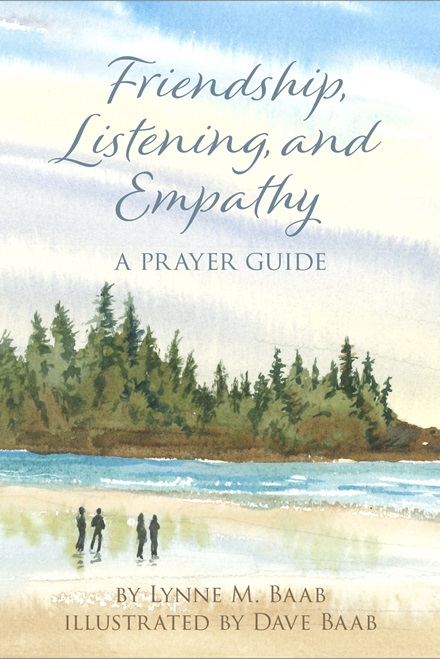
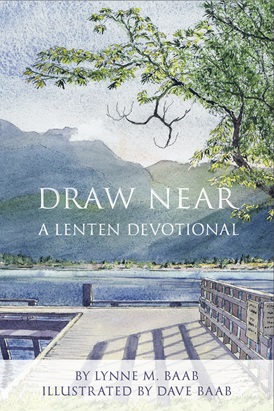
- Two latest books: Draw Near: A Lenten Devotional and Friendship, Listening and Empathy: A Prayer Guide (illustrated with Dave Baab's beautiful watercolors)
- Most popular book, Sabbath Keeping: Finding Freedom in the Rhythms of Rest (audiobook, paperback, and kindle)
- quick overview of all Lynne's books
- more than 50 articles Lynne has written for magazines on listening, Sabbath, fasting, spiritual growth, resilience for ministry, and congregational communication
You can listen to Lynne talk about these topics:
"Lynne's writing is beautiful. Her tone has such a note of hope and excitement about growth. It is gentle and affirming."
— a reader
"Dear Dr. Baab, You changed my life. It is only through God’s gift of the sabbath that I feel in my heart and soul that God loves me apart from anything I do."
— a reader of Sabbath Keeping
Subscribe
To receive an email alert when a new post is published, simply enter your email address below.
Featured posts
- Drawing Near to God with the Heart: first post of a series »
- Quotations I love: Henri Nouwen on being beloved »
- Worshipping God the Creator: the first post of a series »
- Sabbath Keeping a decade later: the first post of a series »
- Benedictine spirituality: the first post of a series »
- Celtic Christianity: the first post of a series »
- Holy Listening »
- A Cat with a Noble Character »
- Welcome to my website »
Tags
Archive
- October 2026 (1)
- September 2026 (6)
- August 2026 (4)
- July 2026 (5)
- June 2026 (5)
- May 2026 (5)
- April 2026 (3)
- March 2026 (3)
- February 2026 (2)
- January 2026 (6)
- December 2025 (6)
- November 2025 (4)
- October 2025 (3)
- September 2025 (5)
- August 2025 (4)
-
July 2025 (6)
- Praying about the flow of time: Praying about AND — again
- Praying about the flow of time: Praying for our ordinary lives
- Praying about the flow of time: Wind and water
- Praying about the flow of time: Paying attention to our stories
- What I learned from the past year's blog posts
- First post in a new series: Journey
- June 2025 (4)
- May 2025 (4)
- April 2025 (4)
- March 2025 (5)
- February 2025 (4)
- January 2025 (5)
- December 2024 (3)
-
November 2024 (5)
- Praying about the flow of time: Small actions with big benefits
- Praying about the flow of time: The overlap of the sacred and the ordinary
- Praying about the flow of time: The joy of the kingdom of God
- Praying about the flow of time: Advent can be confusing
- Praying about the flow of time: Why Jesus had to come
-
October 2024 (5)
- Praying about the flow of time: Rosh Hashanah, the Jewish New Year
- Praying about the flow of time: A month of celebrating renewal and moral responsibility
- Praying about the flow of time: The Feast of Tabernacles calls us to stay fluid and flexible
- Praying about the flow of time: Daily rhythms of prayer
- Praying about the flow of time: All Hallows Eve and All Saints Day
- September 2024 (3)
- August 2024 (5)
- July 2024 (3)
- June 2024 (5)
- May 2024 (5)
- April 2024 (4)
-
March 2024 (5)
- Friendship, loneliness, and prayer: Praying about distractions from empathy
- Friendship, loneliness, and prayer: Praying to keep empathy flowing
- Friendship, loneliness, and prayer: Everyday initiative
- Friendship, loneliness, and prayer: Praying for guidance for ending conversations
- Friendship, loneliness, and prayer: Reflecting on the series
- February 2024 (4)
- January 2024 (2)
-
December 2023 (6)
- Friendship, loneliness, and prayer: Initiating
- Friendship, loneliness, and prayer: Praying about listening roadblocks
- Friendship, loneliness, and prayer: Praying to love the poverty in our friends
- Friendship, loneliness, and prayer: Praying for “holy curiosity”
- Friendship, loneliness, and prayer: Praying for “holy listening”
- Friendship, loneliness, and prayer: Praying to give affection extravagantly
- November 2023 (4)
-
October 2023 (5)
- Friendship, loneliness and prayer: A listening skill with two purposes
- Friendship, loneliness, and prayer: Saying “thank you” to friends
- Friendship, loneliness, and prayer: One more way reflecting helps us
- Friendship, loneliness, and prayer: Lessons from two periods of loneliness
- Friendship, loneliness, and prayer: Types of reflecting, a listening skill
- September 2023 (4)
- August 2023 (4)
- July 2023 (5)
- June 2023 (3)
- May 2023 (6)
- April 2023 (4)
- March 2023 (4)
- February 2023 (4)
- January 2023 (4)
- December 2022 (5)
- November 2022 (1)
- October 2022 (5)
- September 2022 (5)
-
August 2022 (6)
- Draw near: Confessing sin without wallowing
- Draw near: A favorite prayer about peace, freedom, and much more
- Drawing near with Desmond Tutu: God’s love is the foundation for prayer
- Draw near: Worshipping God with Desmond Tutu
- Draw near: Yearning, beseeching and beholding with Desmond Tutu
- Draw near: Praising God with Desmond Tutu
- July 2022 (2)
- June 2022 (6)
- May 2022 (5)
- April 2022 (6)
- March 2022 (5)
- February 2022 (4)
- January 2022 (3)
- December 2021 (5)
- November 2021 (4)
- October 2021 (5)
- September 2021 (4)
- August 2021 (4)
- July 2021 (4)
- June 2021 (4)
- May 2021 (4)
- April 2021 (5)
- March 2021 (4)
- February 2021 (4)
- January 2021 (4)
- December 2020 (5)
- November 2020 (3)
- October 2020 (5)
- September 2020 (4)
- August 2020 (4)
- July 2020 (5)
- June 2020 (4)
-
May 2020 (4)
- Spiritual diary of sheltering in place: The lifeline of separating thoughts from feelings
- Spiritual diary of sheltering in place: The lifeline of welcoming prayer
- Spiritual diary of sheltering in place: a kite string as a lifeline
- Spiritual diary of sheltering in place: The lifeline of God’s distant future
-
April 2020 (7)
- Spiritual diary of self-isolation: the lifeline of God’s constancy
- Spiritual diary of sheltering in place: The lifeline of accepting my place as a clay jar
- Spiritual diary of sheltering in place: the lifeline of memories
- Spiritual diary of sheltering in place: the lifeline of “Good” in “Good Friday”
- Spiritual diary of sheltering in place: The lifeline of “easier does not mean easy”
- Spiritual diary of sheltering in place: The lifeline of nature
- Spiritual diary of sheltering in place: the lifeline of God’s voice through the Bible
-
March 2020 (7)
- Important anniversaries in 2020: The first Earth Day in 1970
- Important anniversaries in 2020: Florence Nightingale was born in 1820
- Spiritual diary of self-isolation: Weeks 1 and 2
- Spiritual diary of self-isolation: God's grace as a lifeline
- Spiritual diary of self-isolation: The lifeline of limits on thoughts
- Spiritual diary of self-isolation: Wrestling with God for a blessing
- Spiritual diary of self-isolation: Responding to terror by listening to Jesus voice
- February 2020 (4)
- January 2020 (5)
- December 2019 (4)
- November 2019 (4)
- October 2019 (5)
- September 2019 (4)
- August 2019 (5)
- July 2019 (4)
- June 2019 (4)
- May 2019 (5)
- April 2019 (4)
- March 2019 (4)
- February 2019 (4)
-
January 2019 (5)
- Nurturing friendships in a cellphone world: Jesus as Friend
- Nurturing friendships in a cellphone world: Friendship with Christ and friendship with others
- Nurturing friendships in a cellphone world: Who is my neighbor?
- Nurturing friendships in a cellphone world: Friendship as action
- Nurturing friendships in a cellphone world: Hymns that describe friendship with God
- December 2018 (3)
-
November 2018 (5)
- Connections between the Bible and prayer: Sensory prayer in Revelation
- First post in a new series: Nurturing friendships in a cellphone world
- Nurturing friendships in a cellphone world: Strong opinions and responses
- Nurturing friendships in a cellphone world: My conversation partners about friendship
- Nurturing friendships in a cellphone world: Two views about communication technologies
- October 2018 (4)
- September 2018 (4)
-
August 2018 (5)
- Providing Christian Care in Our Time
- Providing Christian care in our time: Seven trends in pastoral care today
- Providing Christian Care in Our Time: Skills for Pastoral Care
- Providing Christian care: The importance of spiritual practices
- First post in a new series: Connections between the Bible and prayer
- July 2018 (4)
- June 2018 (4)
- May 2018 (5)
- April 2018 (4)
- March 2018 (5)
- February 2018 (4)
- January 2018 (4)
- December 2017 (5)
- November 2017 (4)
- October 2017 (4)
- September 2017 (5)
- August 2017 (4)
- July 2017 (4)
- June 2017 (4)
-
May 2017 (5)
- My new spiritual practice: Separating thoughts from feelings
- My new spiritual practice: Feeling the feelings
- My new spiritual practice: Coping with feelings that want to dominate
- My new spiritual practice: Dealing with “demonic” thoughts
- My new spiritual practice: Is self-compassion really appropriate for Christians?
- April 2017 (4)
- March 2017 (5)
- February 2017 (4)
- January 2017 (4)
- December 2016 (5)
- November 2016 (4)
- October 2016 (4)
- September 2016 (5)
- August 2016 (4)
- July 2016 (4)
- June 2016 (4)
- May 2016 (5)
- April 2016 (4)
- March 2016 (5)
- February 2016 (4)
- January 2016 (4)
- December 2015 (4)
- November 2015 (4)
- October 2015 (5)
- September 2015 (4)
- August 2015 (4)
- July 2015 (4)
- June 2015 (4)
- May 2015 (4)
- April 2015 (6)
- March 2015 (4)
- February 2015 (4)
- January 2015 (4)
- December 2014 (5)
- November 2014 (4)
- October 2014 (4)
- September 2014 (4)
- August 2014 (5)
- July 2014 (4)
- June 2014 (7)